Paris charges a lot for its terraces, museums, and transportation. Enjoying Paris on a daily basis requires knowing the concrete mechanisms that allow you to reduce costs without compromising the quality of outings. Scheduled free events, soft mobility, recurring pedestrian zones: the capital has structured a set of measures in recent years that change the way to experience the city, provided you know when and where to use them.
Pedestrian Zones and “Paris Respire” Days: A Calendar to Exploit
The City of Paris has consolidated its permanent or recurring pedestrian zones in several areas. Le Marais, Mouffetard, the Sentier, the Champs-Élysées, and the surroundings of the Canal Saint-Martin are subject to regular closures to automobile traffic on certain days and times.
This initiative, grouped under the label “Paris Respire,” transforms usually noisy thoroughfares into walkable or bike-friendly promenades. The reflex to adopt: check the closure calendar on the City of Paris website before planning a Sunday stroll.
The interest goes beyond simple walking comfort. These car-free zones often concentrate neighborhood activities, temporary markets, and an atmosphere that the same streets do not offer during the week. Regularly consulting parisastuce.fr helps identify these time slots and other good deals related to pedestrian life in Paris.
Cycling Network in Paris: A Structural Alternative
The Paris cycling network has further progressed in 2025, with a significant increase in dedicated facilities. In 2026, new construction sites are visible on heavily trafficked routes like Boulevard Murat and Avenue d’Ivry, accompanied by enhanced safety measures at accident-prone intersections.
This trend is no longer marginal. Biking has become a credible daily mode of transportation in the majority of districts, including for commuting. The financial savings compared to a traditional transport subscription are notable over a full year.
Combining Biking and Pedestrian Zones
On “Paris Respire” days, temporary bike lanes double the usual routes. Riding on a Sunday morning between Bastille and République along the banks of the Canal Saint-Martin, without motorized traffic, provides access to a city that is radically different from that of Monday morning.
For longer trips, secure bike lanes along the Seine now connect several districts without interruption. This continuous network changes the game for family outings or trips to large parks.
Cultural Freebies in Paris: What Really Works
The permanent collections of several Parisian museums remain accessible without a ticket. The Petit Palais, the Bourdelle Museum, and its sculpture garden are among them. These institutions are not consolation prizes: the Petit Palais houses collections ranging from Antiquity to Art Nouveau in a building that is worth the visit on its own.
On the first Sunday of the month, some national museums open their doors for free. The trade-off is a marked influx, especially in large establishments. Two approaches allow you to take advantage of this:
- Favor less publicized museums (Bourdelle, Cernuschi, Museum of Romantic Life) where the waiting line remains manageable even on the first Sunday
- Arrive as soon as the large museums open to enjoy rooms that are still accessible during the first hour
- Check the ongoing temporary exhibitions, as some are included in the free admission on the first Sunday, while others are not
Free Access for Young People and European Residents
Those under 26 residing in the European Union benefit from free admission to national museums and monuments. This rule, often unknown even to locals, covers sites like the Musée d’Orsay or the Panthéon. No tourist pass is required: just an ID is enough.
Neighborhoods to Explore on Foot to Discover Paris Differently
Discussions among Parisians often return to the same observation: a deep knowledge of one’s own neighborhood changes the perception of the city. Exploring the side streets of your arrondissement on foot reveals restaurants, pocket parks, and shops that metro journeys systematically miss.
Some areas offer a particularly favorable ratio of discovery density to tranquility:
- Belleville and its artist studios open during regular open house events, with a view of Paris from Belleville Park that rivals that of Sacré-Coeur in Montmartre
- The Butte-aux-Cailles neighborhood, where its small cobbled streets concentrate moderately priced dining options far from tourist circuits
- The covered passages of the 2nd and 9th arrondissements (Jouffroy, Verdeau, Panoramas), freely accessible and sheltered from the rain
- The Petite Ceinture, an old railway line converted into a green promenade on several sections open to the public
Walking remains the most reliable way to spot good deals: daily menus displayed in shop windows, neighborhood markets during the week, shared gardens open some afternoons. The metro is a transit tool, not a discovery tool.
Eating in Paris Without Breaking the Bank: Concrete Mechanisms
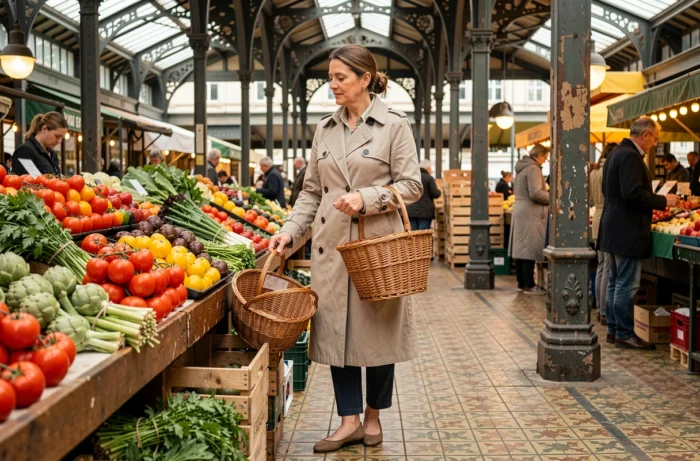
Parisian food markets often offer prices lower than those of downtown supermarkets, especially at the end of the market when producers are selling unsold goods. The Aligre market, open almost every day, is one of the cheapest in the capital.
For dining, weekday lunch specials remain the most effective lever. The majority of Parisian restaurants practice a significant price difference between the lunch menu and the evening menu. Ordering the daily special in a bistro in the 11th or 20th arrondissement costs significantly less than the same quality of cuisine in central arrondissements.
Drinking Water Fountains and Picnicking in Gardens
Paris has a dense network of drinking water fountains, including sparkling water fountains in several parks. The Luxembourg Garden, Buttes-Chaumont, or Montsouris Park allow picnicking on their lawns. Combining a morning market visit with a lunch in the garden at noon constitutes a viable daily routine, not just a tourist activity.
The most cost-effective way to enjoy Paris daily ultimately comes down to a simple habit: stepping outside your usual routes, on foot or by bike, while checking the calendar of free events and pedestrian zones before each weekend. The good deals in Paris are not hidden; they are just a street or a schedule away from common reflexes.