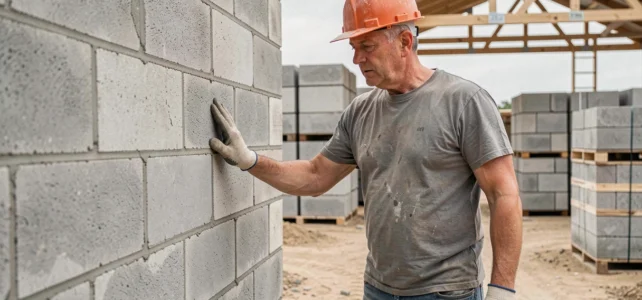
When considering construction, the choice of wall material affects both the immediate budget and long-term energy expenses. Concrete blocks largely dominate individual construction in France, but expanded polystyrene formwork blocks are gaining ground. Comparing their respective prices requires going beyond the simple cost of raw material to include labor, insulation, and regulatory compliance.
Expanded Polystyrene Formwork Blocks: A Construction System Often Misunderstood
The term “polystyrene house” can be misleading. It is not a light or temporary dwelling. The principle is based on insulating formwork blocks made of expanded polystyrene (often abbreviated as BCI). Two polystyrene walls enclose a void that is filled with reinforced concrete on site.
The finished wall thus combines the structural mass of concrete with the integrated insulation of polystyrene. This dual function radically changes the budget approach: the “insulation” line almost disappears from the estimate, as the block already provides high thermal resistance.
Have you noticed that estimates for concrete block houses always include a separate line for insulation? With BCI, this line is absorbed by the material itself. When trying to estimate the price of a polystyrene house, one must therefore think in terms of the total cost of the finished wall, not the unit price of the block.
Price of Concrete Blocks: The Cheapest Material, But Not the Cheapest Wall
Concrete blocks remain the most affordable block to purchase. Their unit price is significantly lower than that of an insulating formwork block. This difference explains their dominance in the individual housing market.
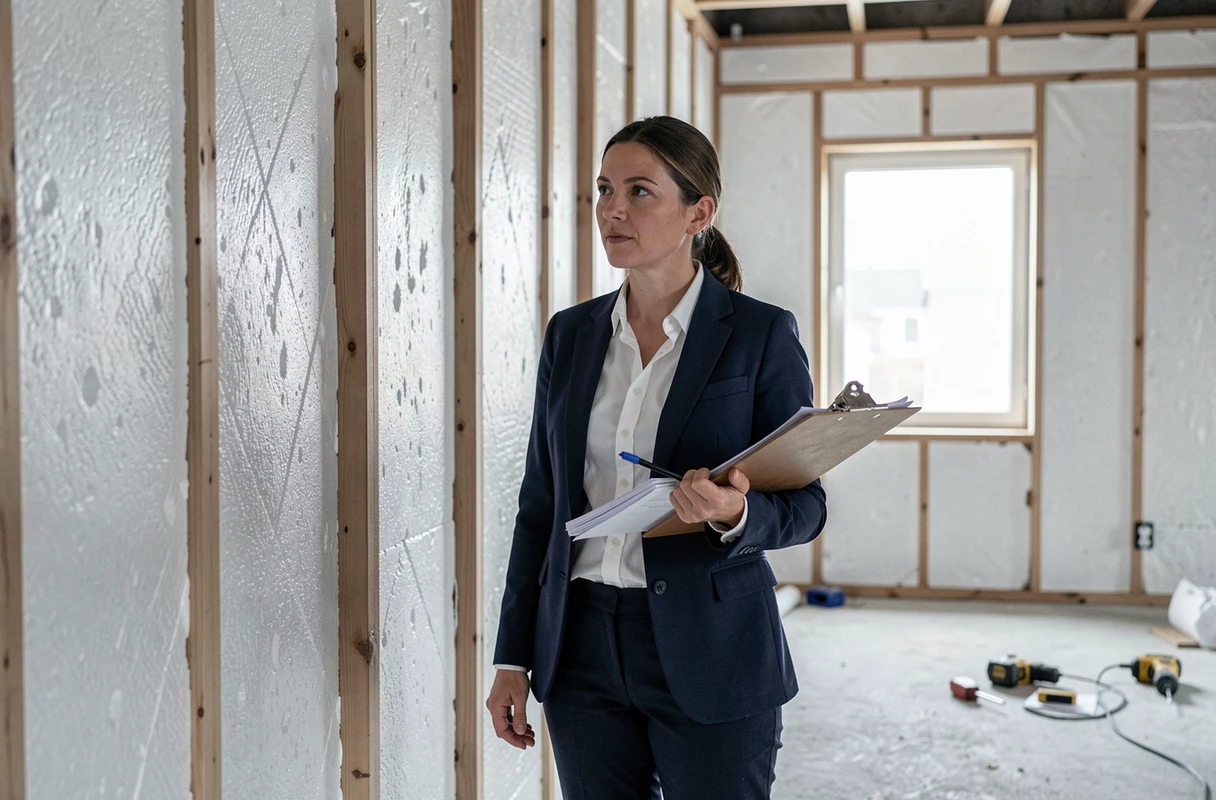
The trap is to stop there. A bare concrete block wall is a thermal sieve. To comply with current environmental regulations (RE 2020), it is mandatory to add additional insulation, either from the inside or the outside.
Factors That Increase the Cost of Concrete Blocks
- External thermal insulation (ITE), whose cost per square meter often exceeds that of the concrete block itself, along with the installation of a finishing coat on the insulation
- Internal thermal insulation (ITI), which is less expensive in materials but reduces the usable surface area and requires a double layer of plasterboard
- Thermal bridges at wall-floor and wall-joinery junctions, more frequent with concrete blocks and requiring specific treatments to meet regulatory thresholds
The result: the finalized concrete block wall costs much more than the material alone. The price difference with a wall made of formwork blocks is significantly reduced once insulation is factored into the calculation.
Total Cost of Construction: Polystyrene vs. Concrete Blocks – Where Does the Real Gap Lie?
Comparing only the price of materials is like comparing the price of an engine without considering the bodywork. The right reflex is to evaluate the cost of the finished wall, ready to receive a coat or cladding.
Installation Time and Labor
The formwork blocks fit together using a groove and tongue system. The implementation is faster than traditional concrete block assembly, where each row requires mortar jointing. A BCI site reduces the structural work time by several weeks compared to an equivalent concrete block site.
Fewer days on site means less billed labor. This saving partially offsets the higher cost of the formwork material. For a mason, the technicality differs: pouring concrete into the blocks requires specific skills, and not all craftsmen have mastered it yet.
Integrated or Additional Insulation
With formwork blocks, insulation is part of the wall. No second intervention, no additional material to buy, no extra installation time. With concrete blocks, the added insulation represents a separate budget item, often underestimated during initial estimates.
The raw price gap between the two materials narrows significantly when adding concrete blocks, insulation, adhesive or fixings, vapor barrier, and interior finishing.
Thermal Performance and Energy Bills: The Invisible Cost Over Ten Years
Why does this criterion matter as much as the construction estimate? Because a poorly insulated wall generates heating expenses that, accumulated over a decade, can represent an amount comparable to the initial extra cost of a more efficient material.
Expanded polystyrene has a very low thermal conductivity. A wall made of formwork blocks achieves high insulation levels without excessive thickness. The concrete block alone, on the other hand, allows heat to escape: its intrinsic thermal resistance is low.
- A well-installed BCI wall limits thermal bridges thanks to the continuity of the insulating envelope
- A concrete block wall with ITE achieves comparable performance, but at the cost of a more complex and expensive implementation
- A concrete block wall with ITI often lags behind thermally, particularly at structural junctions
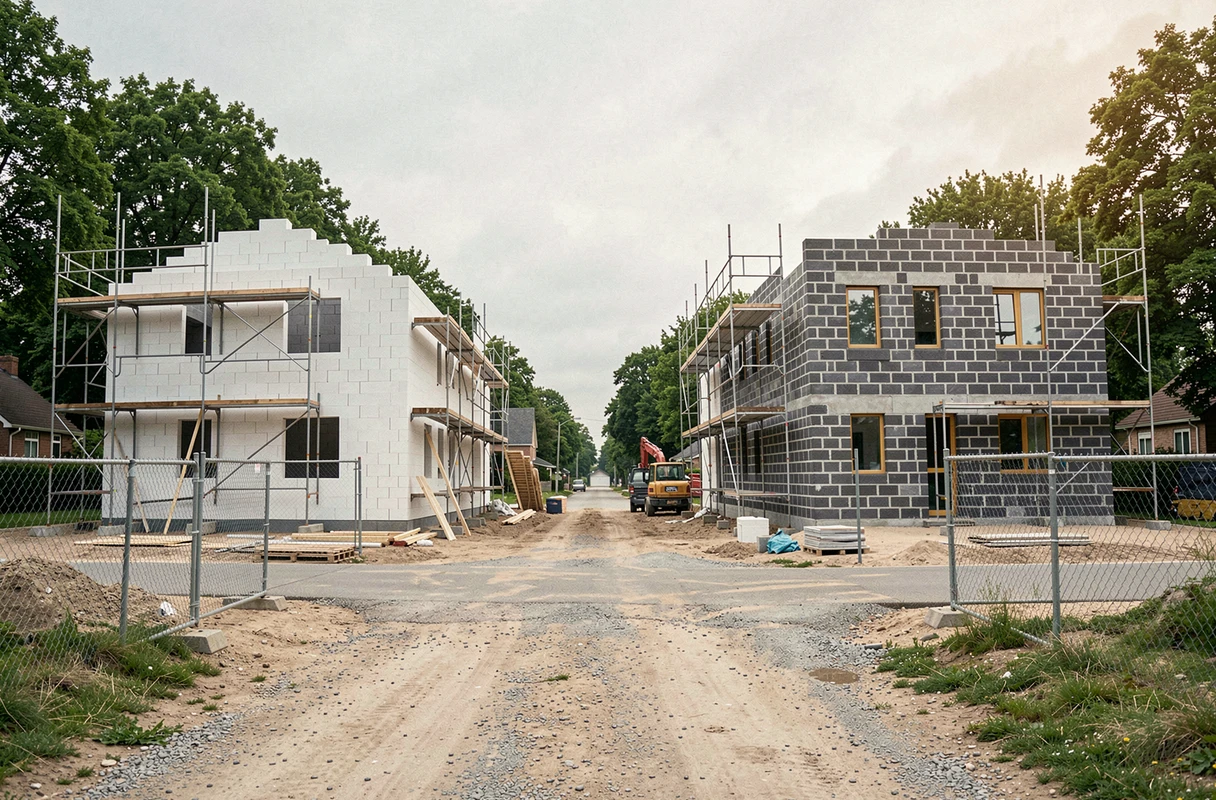
Over time, the initial extra cost of the insulating polystyrene is offset by lower energy bills. The payback speed depends on the local climate, the type of heating, and the size of the house.
Availability of Craftsmen and Local Market Reality
Concrete blocks benefit from a network of trained masons available throughout France. Finding a competent professional poses no difficulty. For expanded polystyrene formwork blocks, the situation is different: companies trained in this technique are still fewer.
This relative scarcity can lead to higher quotes or longer waiting times. In some regions, the lack of competition among BCI installers keeps labor prices higher than those for traditional concrete blocks.
The choice of material also depends on the local artisan offer. Before comparing theoretical figures, requesting several quotes in your geographical area remains the most reliable approach to measure the real gap between the two solutions.
Construction with expanded polystyrene formwork blocks is not systematically more expensive than a concrete block site once all items are added. Concrete blocks win on the entry cost, while expanded polystyrene wins on integrated insulation and installation time. The final budget hinges on the overall estimate, not on the unit price of the block.