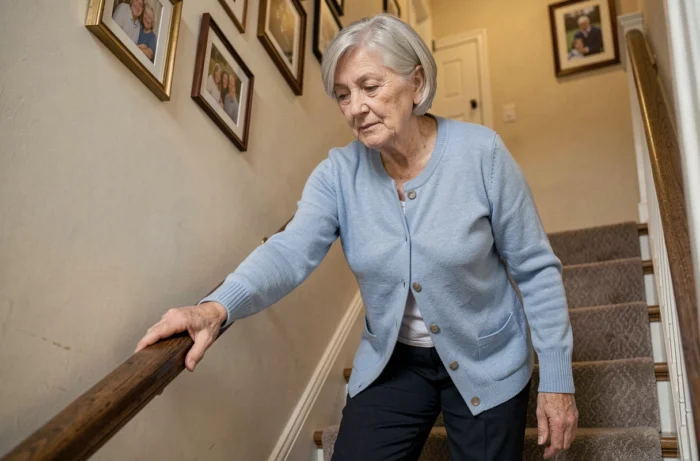
In France, falls among seniors aged 65 and over represent a major public health issue, and the trend is on the rise. Between 2019 and 2024, the standardized hospitalization rate related to falls increased by approximately 20%, and the associated mortality by about 18%, according to data from Santé publique France.
In 2024, there were 174,824 hospitalizations and 20,148 deaths related to a fall among those aged 65 and older. This ongoing deterioration raises questions about the effectiveness of current prevention policies.
Risk Gradient by Age Group: Seniors Far from Equal in Terms of Falls
Most content treats “older adults” as a uniform block. Data from Santé publique France paints a much more nuanced picture. The risk of hospitalization for falls among those aged 85 and older is several times higher than that of those aged 65-74.
This difference in risk means that prevention strategies targeting “seniors” as a whole miss the mark. An effective program should focus its resources on the most exposed age groups, particularly after age 80, where muscle loss and balance disorders accelerate.
As detailed by the Portail de la Santé website, understanding the underlying physiological mechanisms helps to better tailor the preventive response according to each individual’s profile.
Medications and Polypharmacy: An Underestimated Fall Factor
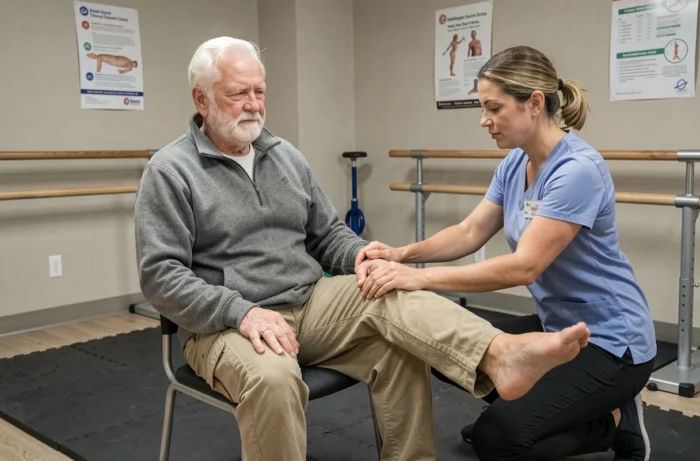
Motor disorders, decreased vision, or balance problems are often cited as the main causes of frequent falls among seniors. However, one factor remains under-discussed in public discourse: polypharmacy, meaning the simultaneous use of multiple treatments.
Some classes of medications directly increase the risk of falls. Psychotropics (benzodiazepines, antidepressants, antipsychotics) impair alertness and coordination. Antihypertensives can cause orthostatic hypotension, those sudden drops in blood pressure upon standing that destabilize the individual.
Diuretics, frequently prescribed to older adults, promote dehydration and electrolyte imbalances, both of which weaken balance. When a person over 80 takes five or six daily medications, drug interactions become difficult to predict.
- Benzodiazepines increase the risk of daytime drowsiness and dizziness, particularly dangerous during nighttime trips to the bathroom.
- Fast-acting antihypertensives can cause a drop in blood pressure within minutes of moving from a lying to a standing position.
- Anticholinergic medications (prescribed for incontinence or certain allergies) can sometimes cause blurred vision and mild confusion, two direct factors leading to imbalance.
A regular review of prescriptions by the primary care physician or a geriatrician serves as a concrete preventive measure. This process, known as “deprescribing,” aims to eliminate or reduce treatments where the benefit-risk ratio has become unfavorable.
Hearing Loss and Falls Among Seniors: A Documented but Underutilized Link
The inner ear is not only for hearing. The vestibular system, located in the inner ear, plays a central role in maintaining balance. Untreated hearing loss is associated with an increased risk of falls, and this correlation is now well documented.
The problem lies in screening. In France, the lack of systematic hearing screening among older adults delays management. An appropriate hearing aid does not just correct deafness: it helps maintain spatial orientation and alertness to obstacles.
Cognitive disorders related to auditory isolation also exacerbate the situation. A person who hears poorly tends to withdraw, move less, and lose muscle mass. This cycle creates conditions for a serious fall.
Adapted Physical Activity and Home Modifications: What the Data Shows
The Haute Autorité de Santé recommends prescribing adapted physical activity for older adults at risk of falls. Programs that combine lower limb muscle strengthening and balance exercises show the most promising results.
Tai chi, often mentioned, is among the studied activities. However, the available data do not allow for concluding that one activity surpasses all others. The consistency of practice matters more than the type of exercise chosen.
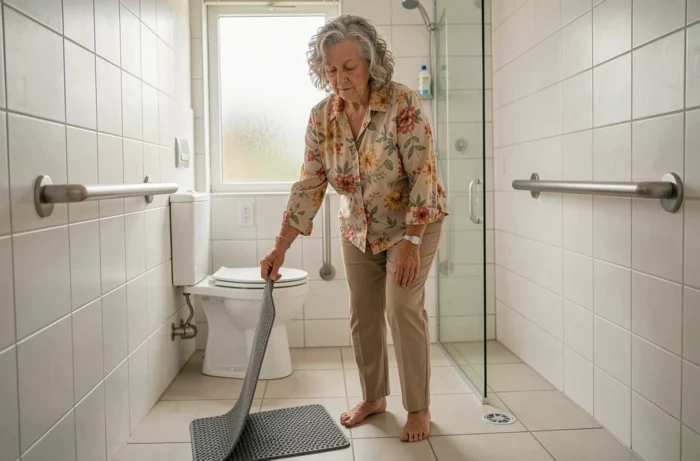
On the home front, concrete modifications remain the first line of defense:
- Installation of grab bars in the bathroom and toilet, two places where many falls occur at home.
- Removal of unsecured rugs and electrical cords on the floor, which are responsible for frequent tripping.
- Sufficient lighting in hallways and staircases, with switches accessible from the bed for nighttime movements.
- Wearing closed shoes with non-slip soles indoors, rather than slippers or socks.
Emergency response systems complement these measures. A pendant or connected bracelet allows for alerting emergency services in case of a fall, reducing the time spent on the ground – a major aggravating factor for post-fall complications.
Fall prevention among seniors is not just about one action. It involves an approach that intersects medication review, correction of sensory deficits, maintenance of physical activity, and home adaptation. The continuous rise in hospitalizations despite national plans shows that the on-the-ground implementation of these measures remains insufficient, particularly for those over 85 who bear the majority of the risk.