
Flannel and cotton refer to two textile realities that are often confused. Flannel is not a fiber: it is a type of weaving and finishing applied to a fiber, which can be cotton, wool, or a synthetic blend. Comparing flannel and cotton is therefore akin to comparing a manufacturing process to a raw material, which changes the way to approach the choice of bedding or clothing.
Texture and skin friction: what flannel changes upon contact with the skin
The brushing of flannel creates a fluffy surface that traps air between the fibers. This air cushion gives an immediate sensation of warmth to the touch, even before the fabric has had time to warm up against the body.
This texture has a direct counterpart on the skin. Dermatologists and specialized organizations like the Swiss Allergy Centre (aha!) recommend 100% cotton sheets with a smooth weave for sensitive or eczema-prone skin, rather than textured fabrics like flannel. The brushed surface increases friction and can irritate atopic skin, whereas a cotton percale or satin weave reduces abrasive contact.
A fabric made of cotton flannel remains softer than synthetic flannel, but its surface is still textured by definition. For someone without specific skin issues, this texture is a comfort asset. For someone suffering from chronic irritations, the determining factor is not the fiber but the type of weave.

Thermal regulation: flannel in winter, smooth cotton in summer
Flannel excels in a specific role: maintaining body heat in cold weather. Its loose weave and brushed surface create an insulating layer that limits heat loss during the night. This is why flannel sheets are associated with winter months.
Tightly woven cotton (percale, satin) works in the opposite way. It wicks moisture and allows air to circulate, providing a feeling of freshness. The breathability of smooth cotton makes it a suitable choice for warm seasons or for those who sweat at night.
Weight matters as much as the weave
A percale cotton sheet with a high weight can keep you warmer than a lightweight flannel. The weight of the fabric determines both insulation and the type of finish. Relying solely on the label “flannel” or “cotton” without checking the weight can lead to unpleasant surprises.
Field reports vary on this point: some users of lightweight flannel report insufficient warmth in mid-winter, while others find a dense percale sheet perfectly suited for cool autumn nights. The boundary between the two categories is less clear than bedding guides suggest.
Care and durability: pilling as a real choice criterion
Flannel pills. This is a property related to its brushed surface, not a manufacturing defect. The raised fibers from brushing eventually clump into small balls on the surface of the fabric, especially after the first washes.
- Cotton flannel pills less than synthetic flannel (polyester), but it still pills more than smooth woven cotton
- A low-temperature wash and air drying slow down the process, without eliminating it
- Percale or satin cotton gains softness over washes, while flannel gradually loses its original texture
Flannel requires more careful maintenance to retain its properties. It does not withstand high temperatures and fabric softeners well, which accelerate the degradation of the brushed fibers. Smooth cotton, in this regard, ages better with less care.
Cotton flannel or synthetic flannel: the fiber composition remains decisive
The label “flannel” says nothing about the fiber used. A 100% cotton flannel and a 100% polyester flannel share only their brushed finish. Their performances differ on all other criteria.
- Cotton flannel breathes, absorbs moisture, and is suitable for skin that sweats at night
- Polyester flannel retains heat more aggressively but also traps moisture, which can cause a clammy feeling
- Synthetic flannel costs less but pills faster, sometimes within the first three washes
- Wool flannel, rarer, offers superior thermal regulation compared to the other two but requires specific care
Reading the full composition on the label remains the most reliable reflex before any purchase. A sheet sold as “flannel” without specifying the fiber is almost always a predominantly synthetic blend.
Percale, satin, flannel: positioning each weave in its use
The choice is not limited to flannel versus cotton. The type of weave applied to cotton radically alters the final result.
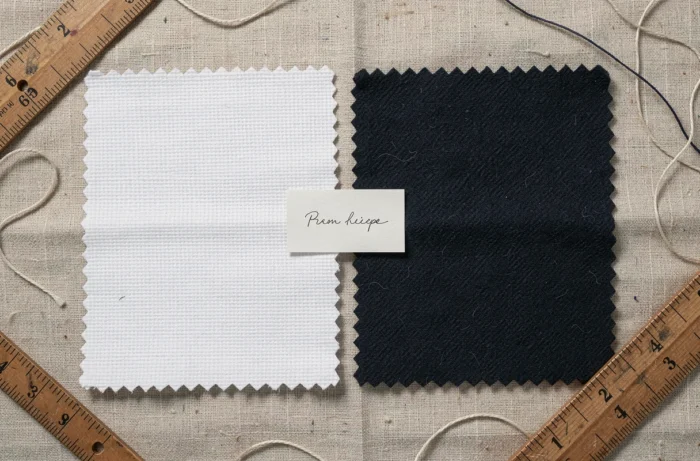
Cotton percale, with its tight plain weave, gives a matte and cool touch. Cotton satin, with its satin weave, produces a smooth and slightly shiny surface. Cotton flannel, with its brushed surface, creates a fluffy and warm touch. These three fabrics can be made from the same cotton fiber, with very different results in terms of touch and thermal regulation.
The choice therefore depends less on the fiber than on the intended use. For uncompromising winter comfort, cotton flannel remains the most suitable fabric. For bedding usable in three seasons, cotton percale offers a better compromise. For a very smooth contact, cotton satin is suitable, provided one accepts a fabric that slips more.
The question “flannel or cotton” masks the real decision to be made: which weave, which weight, and which fiber correspond to your skin sensitivity, the temperature of your room, and your tolerance for maintenance. Three concrete criteria that are more valuable than a binary opposition between two terms that do not describe the same thing.