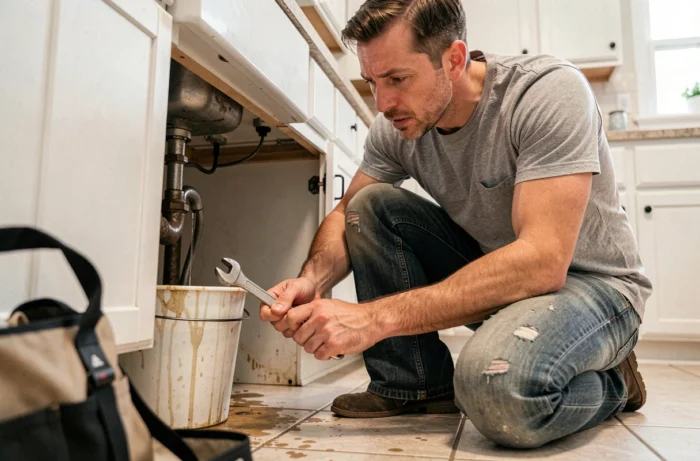
A water leak under the sink, a circuit breaker tripping in the middle of the night, a locked door after a slam: emergency home repairs involve situations where every minute counts. These interventions are legally governed by the contract concluded off-premises, which imposes specific formalities on the professional, even under pressure. Understanding this framework and the right technical reflexes can help avoid an inflated bill as well as a shoddy repair.
Legal obligations of the home repair technician: what the Consumer Code requires
Any repair intervention carried out at a private residence is governed by the rules applicable to off-premises contracts of the Consumer Code. The professional must provide complete pre-contractual information before starting: the identity of the company, characteristics of the service, total price including tax, execution deadlines, remedies, and contact details of the mediator.
A detailed estimate must be provided and signed before any intervention. Even in an emergency situation, this obligation does not disappear. Only the strictly necessary work for immediate safety (shutting off the water supply, securing an electrical panel) can temporarily escape the right of withdrawal.
The point that traps many individuals: as soon as the professional exceeds the scope of the emergency (complete replacement of equipment, additional work not included in the initial estimate), the contract can be completely canceled. The company then exposes itself to civil, criminal, and administrative penalties. A form waiving the right of withdrawal signed in haste does not protect the professional if the work exceeds the strict safety measures.
Before allowing a tradesperson to intervene beyond the initial breakdown, requesting a separate estimate for the additional work remains the best protection. Platforms like sos-urgence-depannage.fr allow for quick access to a structured repair service, with a prior estimate.
Domestic electrical failure: diagnosis before intervention
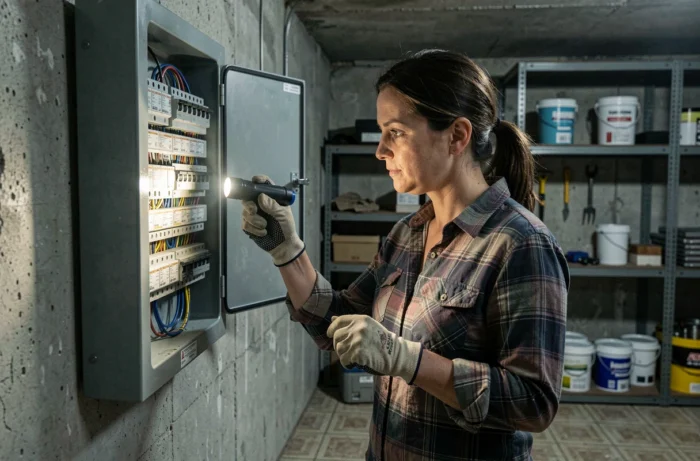
When the power goes out, the first step is to identify whether the outage is general or localized. Checking the electrical panel helps determine if only one circuit breaker has tripped or if the main circuit breaker (connection breaker) is in the off position.
A tripped circuit breaker often indicates a faulty device plugged into the affected circuit. By unplugging devices one by one and then resetting the circuit breaker, one can isolate the source of the problem without any particular technical skills. If the main circuit breaker keeps tripping, the fault may come from a short circuit in the fixed installation, which requires the intervention of an electrician.
Actions to take yourself before calling a professional:
- Check that the main circuit breaker is in the on position, and reset it once if it is not
- Unplug all devices from the affected circuit before resetting the circuit breaker
- Visually inspect the outlets and wiring for signs of burning or a suspicious smell, indicating dangerous overheating
- Never open the electrical panel beyond the accessible circuit breakers, nor touch the connection bars
If resetting fails after unplugging all devices, the fault is likely in the wiring. At this stage, only a qualified professional can intervene safely.
Emergency water leak: limit damage before the plumber arrives
An active leak can cause significant damage in just a few minutes. The priority reflex is to shut off the main water supply of the home. The shut-off valve is usually located near the meter, in a technical closet, under the kitchen sink, or in the bathroom.
After shutting off the water, opening the faucets at the lowest point in the home allows draining the residual pressure in the pipes. Quickly soaking up water and placing mops or basins under the leak limits infiltration to lower floors.
Before the plumber arrives, taking photos of the leak and visible damage is a useful precaution for reporting to the insurance company. Most home insurance contracts include a water damage guarantee that covers repair costs related to a leak or pipe rupture. Some contracts even offer an optional emergency home repair guarantee, covering the intervention of a professional in plumbing, locksmithing, or electricity.
Recognizing a reliable repair technician and avoiding repair scams
Repair scams follow a recurring pattern: highly visible sponsored ads on search engines, premium-rate numbers, and then billing for unnecessary work or replacing parts that are in good condition. Techniques such as deliberately damaging an installation to justify a complete replacement are regularly reported by the DGCCRF.
Several criteria can help filter a professional before allowing them into your home:
- A verifiable SIRET number on public databases and a real physical address (not just a phone number)
- A written estimate provided and signed before the start of the intervention, mentioning the total price including tax, details of parts, and labor
- A compliant invoice provided at the end of the intervention, reflecting the elements of the estimate without any unapproved additions
A professional who refuses to provide an estimate before intervening should be dismissed. The right of withdrawal applies to any repair contract concluded off-premises, with a fourteen-day period, except for immediate safety work expressly validated by the client.
Always keep the signed estimate and invoice, as in case of a dispute, you can contact the consumer mediator whose contact details must be included in the professional’s contractual documents. A well-framed repair in advance remains the best guarantee against a runaway intervention.