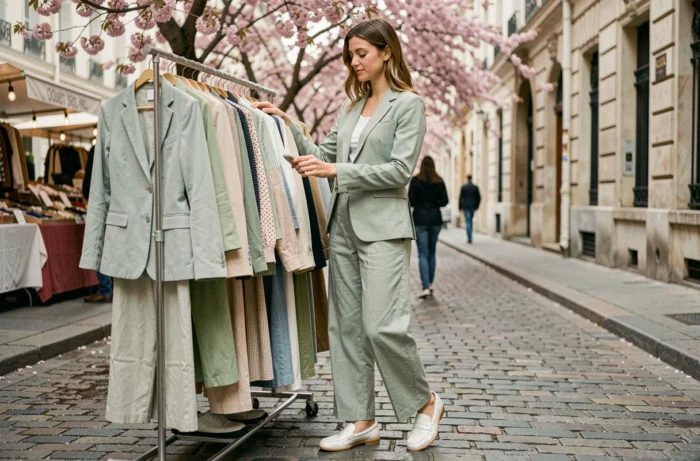
The spring 2026 fashion trends are not just a catalog of colors and silhouettes. This season marks a technical turning point: the requirements of the European regulation ESPR (EU 2024/1781) are beginning to influence choices of materials, cuts, and finishes. The collections arriving in stores already bear the mark of this transition, sometimes visibly, often in the details of manufacturing.
Eco-design in textiles and the ESPR regulation: what’s changing in the spring 2026 collections
The ESPR regulation, which came into effect on July 18, 2024, places textiles among the priority categories for eco-design. The delegated acts setting out detailed requirements (durability, reparability, recycled content, limitation of hazardous substances) are expected by 2027-2028.
We are already observing concrete repercussions on spring-summer pieces. Brands anticipating the regulation are favoring denser-weight materials, reinforced seams, and removable linings. The result: slightly more structured clothing, with a firmer hand than in previous seasons.
Since July 19, 2026, large companies are no longer allowed to destroy unsold new clothing and shoes in the EU, except for safety reasons. This ban is pushing some houses towards creative upcycling.
Kevin Germanier designed his spring-summer 2026 collection for LVMH entirely from unsold products from the group, demonstrating that regulatory constraints can become an aesthetic lever. What follows in terms of spring style directly stems from these industrial choices, which we can find among the trends on Le Comptoir de Violette where the selected pieces reflect this evolution.
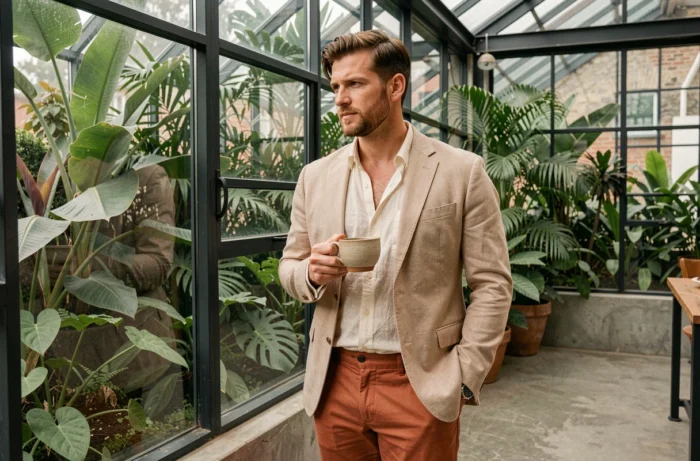
Structured cuts and rigid materials: the spring silhouette that stands out
The barrel cut on jeans, marked shoulders on short jackets, dresses with geometric cutouts: this spring’s fashion trend moves away from the fluid and draped styles that dominated the last two seasons. This rigidity is not coincidental. The durable materials mandated by eco-design hold structure better, naturally guiding patterns towards more architecturally voluminous shapes.
Leather is making a strong comeback, but in different forms. Vegetable-tanned and recycled leathers offer a drier, slightly textured finish, suitable for short pieces: cropped jackets, above-the-knee A-line skirts, bustiers worn over shirts.
The short trench as a key piece
The shortened trench above the hip is the most versatile piece of the season. Worn open over wide trousers, it creates a contrast of proportions. Over a straight dress, it adds a layer without weighing down the silhouette.
We recommend choosing it in a sufficiently dense material so that it retains its shape without ironing. Waxed cotton or recycled gabardine versions hold up better than fine polyesters that crumple after a few wears.
Spring 2026 color palette: butter yellow, terracotta, and off-white
The colors of this spring reflect a retreat from saturated shades. Butter yellow dominates the collections, followed by muted terracotta and an off-white leaning towards ecru. Bright tones (fuchsia, electric blue) are noticeably less prominent compared to past seasons.
Butter yellow works as a warm neutral: it pairs well with beige, navy, and khaki without creating an aggressive contrast. It’s a forgiving color in terms of pairing.
- Butter yellow: ideal as a top piece (blouse, light sweater, jacket) to brighten the face without overwhelming the outfit
- Terracotta: works better on the lower silhouette (trousers, midi skirt) or as an accessory (bag, wide belt)
- Off-white: to be reserved for structured pieces (straight trousers, blazer) to avoid the “underwear” effect that a too-fine white jersey gives
- Faded navy: the transitional shade replacing black in mid-season looks without falling into monotony
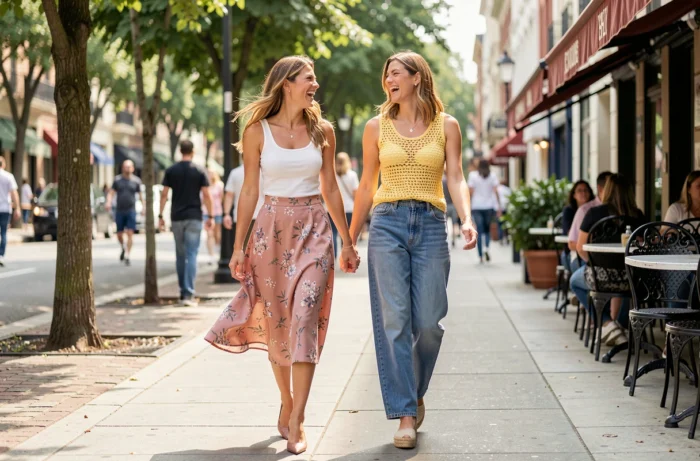
Digital product passport for textiles: identifying quality before purchase
The ESPR regulation provides for the introduction of a digital product passport (DPP) for textiles. This system, accessible via QR code, will provide information on the exact composition, the origin of materials, manufacturing conditions, and repair instructions.
The first brands have started to integrate this passport on their spring-summer 2026 labels, even before the formal obligation. For consumers, it is a concrete verification tool: a garment bearing a readable DPP is generally a sign of a traceable supply chain.
Reading a composition label in spring 2026
Fiber blends are becoming more complex. Where a dress displayed “100% polyester” three years ago, we now see compositions with four or five fibers including recycled polyester, lyocell, and sometimes organic cotton in varying proportions.
- A high percentage of recycled fibers (mentioned on the DPP) indicates an advanced eco-design approach
- The presence of lyocell or Tencel improves drape and breathability on mid-season pieces
- Cotton-linen blends remain the most suitable for temperate spring climates, offering a good compromise between lightness and structure
A unique style this spring comes as much from the choice of materials as from the choice of colors. Pieces designed with an eco-design logic often feature more refined finishes, stronger seams, and a sharper drape. It is these technical details, far more than mere aesthetic trends, that distinguish a spring wardrobe built to last from an assembly of disposable pieces.