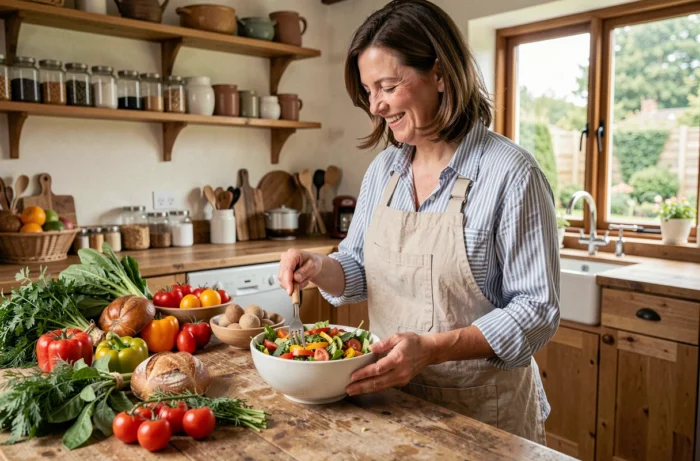
Family meals remain a ritual shared by a large majority of French households. But its form is changing rapidly. Between shorter dinners, scrutinized snacks, and culinary trends that disrupt habits, the family foodie world is undergoing a period of concrete transformations. Here are the news and trends that are reshaping family cooking in 2026.
Family Dinner in 2026: A Compressed Ritual That Raises Questions
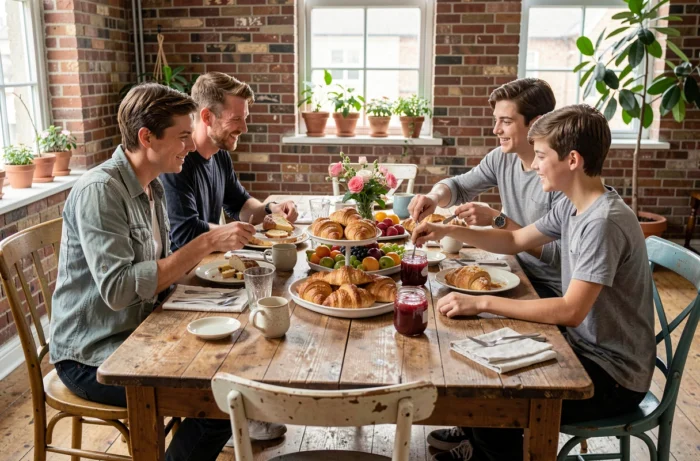
Have you noticed that family dinners are happening faster and faster? A recent survey confirms this impression: about one third of parents spend 15 to 30 minutes less at the table than they did ten years ago. A quarter of dinners now last less than 30 minutes, while only 8% of parents consider this duration ideal.
The problem is not that families are abandoning shared meals. They maintain them, but under more stressful conditions. More than half of parents still improvise the menu at the end of the day, and the meal is often served later than desired.
This phenomenon of time compression directly affects the quality of exchange around the table. Gastronomic columns often talk about quick recipes or batch cooking, but they rarely address this logistical dimension of family meals. Finding information on Foodies and Family allows for tracking these topics from a concrete angle, focused on the daily lives of households.
Children’s Snacks: Ultra-Processed Products Under Scrutiny
The snack is a key moment in children’s daily eating. In 2026, it is receiving increased attention from consumer associations. Several biscuits and snacks sold in supermarkets have been highlighted for their excessive sugar content and ultra-processed nature.
Specifically, this means that products marketed as suitable for children contain long ingredient lists, with additives and added sugars in large quantities. For a busy parent, the “special child” packaging does not guarantee anything about the actual nutritional quality of the product.
Decoding a Label in Seconds
Rather than memorizing nutritional tables, a few simple reflexes help to quickly sort:
- Check the position of sugar in the ingredient list: if it appears in the top three, the product is very sweet, regardless of the claims on the packaging.
- Count the number of ingredients: beyond ten, the product is likely ultra-processed.
- Favor snacks with a single star ingredient (fresh fruit, bread, cheese) rather than industrial combinations.
This quick reading grid requires no expertise. It helps avoid the most common marketing traps in the children’s aisle.
Plant-Based Cooking in Families: Double-Digit Growth in France
Plant-based cooking is no longer reserved for activist households. In France, the plant market is growing at double digits, driven by an expanding range in fresh and frozen aisles. For families, this translates into easier access to concrete alternatives: vegetable steaks, oat-based creams, dairy-free desserts that simply did not exist in supermarkets a few years ago.
The challenge for foodie parents is not to switch to a 100% plant-based diet. Rather, it is to incorporate one or two meatless meals per week, which is enough to diversify children’s nutritional intake while reducing grocery budgets.
What Still Hinders Family Adoption
Taste and texture remain the primary purchasing criteria for families. A vegetable steak that crumbles during cooking or a tasteless plant-based cheese will not be repurchased, even if its nutritional profile is correct. Brands that succeed are those that prioritize indulgence over health claims.
Price is another major barrier. Plant-based alternatives often remain more expensive per kilo than their animal counterparts. This difference tends to decrease with increased production volumes, but it still weighs on the decisions of households with children.
Family Dining: How Generation Z Parents Are Changing Things
The first members of Generation Z are now parents. Their relationship with dining and grocery shopping differs significantly from that of their predecessors. Recent data shows that these young families are reallocating their food spending towards areas that previous generations considered secondary.
In practice, this translates into increased attention to the origin of products, a marked preference for short supply chains, and intensive use of social media to discover restaurants and recipes. Digital word-of-mouth, via food accounts on Instagram or TikTok, is gradually replacing traditional guides.
The Family Restaurant Reimagined
On the dining side, establishments targeting families are adapting their offerings. The classic children’s menu (burger and fries, ice cream) is giving way to more refined options: smaller portions of the adult menu, plant-based options, transparency about ingredient sourcing.
Chefs who embrace this logic do not compromise on gastronomy. They offer accessible cuisine in terms of portion and price, without sacrificing product quality. This approach appeals to young foodie parents who refuse to choose between dining out and culinary demands.
Social Media and Family Cooking: Between Inspiration and Pressure
Social media are playing an increasingly important role in how families cook. Viral recipes on TikTok or Instagram generate spikes in sales for certain products (feta pasta, tortilla wraps, smash burgers). This phenomenon directly affects households with children, as children themselves are asking to recreate recipes seen online.
The positive aspect is real: families that did not cook are discovering new simple recipes. The downside is a form of pressure to perform in the kitchen. Photos of perfect lunchboxes or homemade snacks create a visual standard that is difficult to maintain daily.
The healthiest trend is to use these platforms as a catalog of quick ideas, without trying to replicate the staging. A homemade burger prepared with the kids on a Sunday night is worth much more than an Instagram-ready dish that took three hours.
The world of family foodies is evolving under the pressure of time, new eating habits, and digital influence. Meals are getting shorter, children’s products are being scrutinized more closely, and plant-based cooking is gaining ground in households. These trends are not mere fads: they reflect lasting changes in how French families eat, cook, and share their meals.