In France, nearly four out of ten business creations are now led by women. This steady progression since 2021 reflects a fundamental shift. However, moving from idea to viable project remains a journey fraught with concrete obstacles: access to funding, isolation, and balancing professional and personal life. Understanding these barriers allows for better navigation around them.
Funding for women entrepreneurs: a persistent gap
For many project leaders, the bottleneck occurs before the business plan or choice of legal status: access to funds.
This is not due to a lack of skills. It is a mix of excessive caution at the start and bias in the evaluation of applications. Women often design projects of smaller initial scale, which can give the impression of lesser potential in the eyes of a funder. Several platforms and associative networks offer tailored solutions, such as specific guarantees or microcredit dedicated to female entrepreneurship.
For information on existing schemes and feedback from other female creators, a useful resource is https://entrepreneuses.fr/, which gathers practical content on the entrepreneurial journey for women.
Network and support: the underestimated lever for entrepreneurs
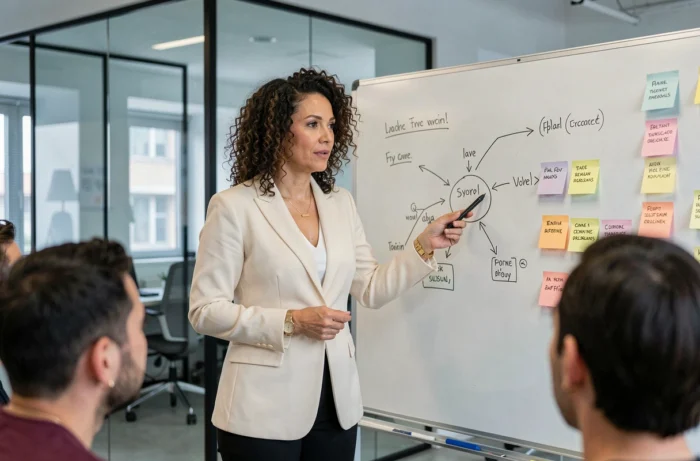
A business project is not built alone. Support goes beyond legal or accounting advice. It also encompasses mindset, decision-making, and managing doubt.
Several organizations offer programs designed for female entrepreneurs:
- Progressive support programs, ranging from a few days of initiation to longer-term follow-up, combining business methodology and work on mindset.
- Collaborative peer networks, designed to break isolation and foster mutual aid, or initiatives supported by France Active.
- Dedicated competitions, like the “101 women entrepreneurs” contest supported by France Active, which provide visibility, a prize, and access to a network of mentors.
Why is this lever underestimated? Because many female creators believe they must master everything before seeking help. The network is not a safety net for fragile projects. It is an accelerator for solid projects that lack support.
Promising sectors and sustainability of businesses created by women
The activities of women entrepreneurs are concentrated in retail and services, but this distribution is evolving. Recent data shows that the share of women in business creation has increased from 26% in 2021 to 29% in 2025, with visible dynamics in sectors long dominated by men.
Caution at the start, ambition in the long term
Women are often more cautious in the initial phase. They size their project with tight budgets, testing their market before investing heavily. This approach, sometimes seen as a hindrance, proves to be an asset for the survival of the business in the medium term.
A project calibrated from the start does not mean a project without ambition. Data shows that the scale grows as progress is made. Development occurs in stages, with a gradual increase in revenue and hiring.

Visibility and credibility: building legitimacy as a business leader
The visibility of a project comes through concrete channels: online presence, participation in professional events, applications for competitions or awards dedicated to female entrepreneurship. These efforts are not superficial marketing. They build credibility with partners, clients, and funders.
The “101 women entrepreneurs” contest, 2026 edition, illustrates this logic well. The winners supported by France Active gain access to enhanced support and business networks. The visibility gained from an award opens doors that traditional outreach cannot unlock.
Motivation of creators: meaning and realization
The motivations of women who start businesses have evolved. The realization of a personal idea and the search for meaning in professional life top the list of motivations cited by female creators. These two dimensions have seen a significant increase compared to previous years.
This is not an abstract discourse. It is an indicator: successful female entrepreneurs are those who align their economic project with personal conviction. This coherence is felt in client relationships, in sales discourse, and in the ability to endure over time.
The growth of female entrepreneurship in France relies on measurable factors: better access to networks, tailored funding schemes, and high sustainability of launched projects. The context has never been more favorable for a woman carrying a business creation project.