Weeds absorb water, light, and nutrients intended for your plants. Mechanical and natural methods become the foundation of all maintenance without resorting to chemicals. Here are ten concrete techniques, listed in no particular order, to keep a garden clean.
1. Thick Mulch with Wood Chips
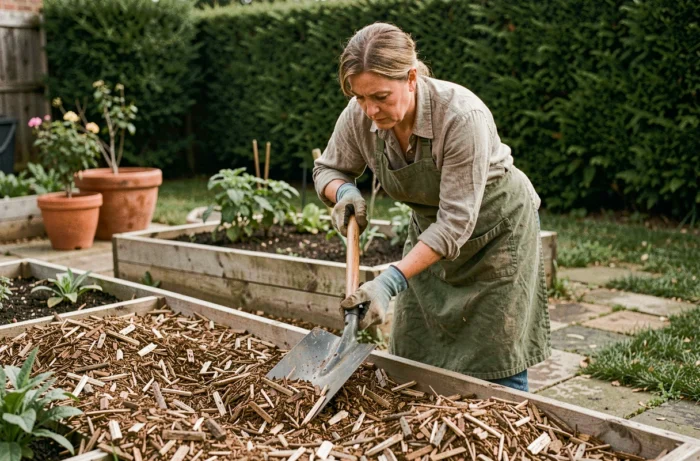
Mulching remains the most effective physical barrier against the germination of weeds. A layer of wood chips, placed on clean soil, blocks light and limits seed germination.
For the protection to last the entire season, you need a thickness of at least seven to ten centimeters. Below this, seeds break through the layer with the first rains. Partially renew in spring when the volume has decreased due to decomposition.
You can also find advice on Les Défricheurs to adapt the type of mulch to each area of your garden.
2. Ground Cover Plants to Occupy the Ground
A bare surface is an open invitation for weeds. Ground cover plants like creeping thyme, periwinkle, or ground ivy form a dense mat that deprives unwanted plants of light.
A well-established ground cover reduces weeding to just a few times a year. Choose species suited to the exposure: thyme for dry full sun, pachysandra for damp shade. Plant closely so that the coverage closes in one season.
3. Manual Weeding with Root Extraction
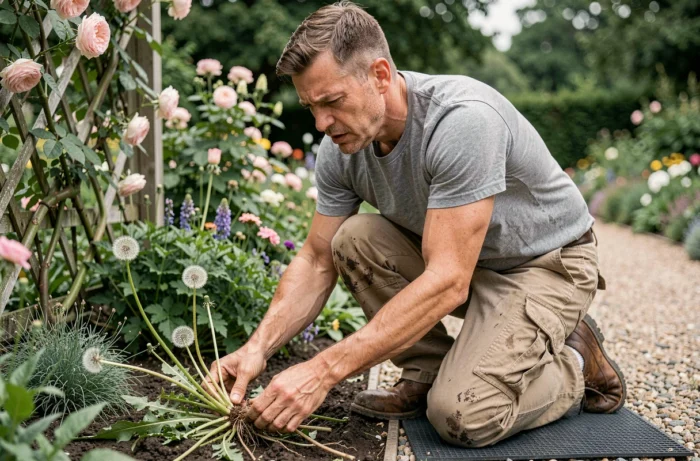
Pulling a weed without removing its taproot is akin to just trimming it. Dandelions or dock will regrow as soon as the soil is moist. A weeding knife or dandelion fork allows you to extract the entire root.
Intervene after rain, when the soil is loose. Each well-executed manual weeding session delays regrowth by several weeks. Focus your efforts on the most exposed areas: vegetable garden borders and hedge bases.
4. False Seedbed Before Planting
Have you noticed that weeds always sprout before your seeds? The false seedbed takes advantage of this trend. Prepare the soil as if for sowing, water it, then wait for the weeds to emerge. Destroy them with a shallow hoeing before sowing or planting your crops.
This technique reduces the seed bank on the surface without turning the soil deeply, which avoids bringing new seeds to the surface. Two successive false seedbeds can eliminate the majority of annual weeds in a plot.
5. Boiling Water on Paved Areas
Between the slabs of a terrace or along a path, boiling water destroys the aerial parts and superficial roots through thermal shock. Pour the cooking water from pasta or potatoes directly onto the shoots.
This method is not suitable for planted beds: the heat does not differentiate between weeds and cultivated plants.
6. White Vinegar for Localized Application
White vinegar acts as a contact herbicide: it burns the leaves without penetrating the root system. Its effectiveness depends on the concentration and timing of application.
Apply on dry, sunny days, in the early morning. Use a sprayer set to a narrow jet to target each plant without touching the surrounding vegetation. White vinegar does not kill the deep roots of tough perennials like couch grass, but it is suitable for young annual shoots on terraces and paths.
7. Baking Soda Between the Slabs
Baking soda alters the surface pH and inhibits germination. Sprinkle it in the joints of paving stones or cracks in concrete after careful sweeping.
Why choose this over salt? Baking soda breaks down without leaving a saline residue that sterilizes the soil in the long term. Expect to renew it after each heavy rain, as the product dissolves quickly.
8. Woven Mulch Fabric for the Vegetable Garden
Woven polypropylene mulch fabric blocks light while allowing water to pass through. It is laid before planting, with crosses cut at the location of each plant.
- Choose a sufficiently dense weight to withstand aggressive perennials like bindweed.
- Secure the fabric with metal staples to prevent the wind from lifting it.
- Cover it with a thin layer of organic mulch to extend its lifespan and improve aesthetics.
This system is suitable for rows of tomatoes, zucchinis, or strawberries where the soil remains in place for several months.
9. Crop Rotation and Green Manure
Leaving a plot bare between two crops offers the ground to weeds. Sow a green manure (mustard, phacelia, crimson clover) as soon as a harvest is finished.
A dense green manure covers the soil in a few weeks and smothers weeds through direct competition. The following spring, mow and incorporate the biomass before replanting. Rotation also breaks the cycle of certain weeds specific to a family of crops.
10. High Mowing of the Lawn
Mowing too short exposes the soil and encourages the germination of weed seeds. Setting the cutting height to seven centimeters or more allows the grass to maintain a dense foliage that screens out light.
A lawn mowed high also develops deeper roots, giving it an advantage in the competition for water against plantains or clovers. Leave the mowing residues in place as mulch: they nourish the soil and retain moisture.
- Raise the blade one notch in spring and fall, the two peaks of weed germination.
- Avoid scalping the edges, areas where weeds settle first.
- Aerate the soil once a year to promote vigorous grass that leaves little room for unwanted plants.
None of these methods work alone in the long term. The combination of mulching, ground covers, and targeted manual weeding yields the most sustainable results. Adapt each technique to the relevant area, whether it’s a vegetable garden, path, or lawn, and intervene early in the season: a weed pulled before it sets seed means several hundred fewer seeds in the soil.