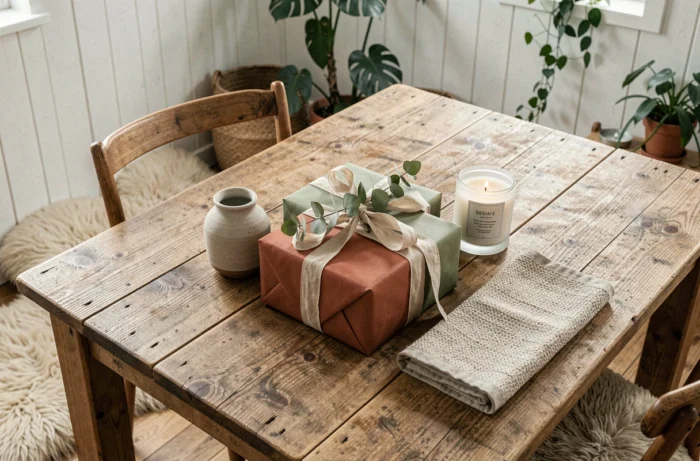
A decorative object given as a gift presents a constraint that traditional commercial selections overlook: it must fit into an interior that we do not control. Colors, volumes, existing style, room brightness—all work against a generic choice. We recommend thinking in terms of material and function before considering the category of the object.
Materials and finishes: what determines the longevity of a decorative gift
The choice of material influences both the aesthetic and the actual lifespan of the gift. A solid wood object (oak, walnut, beech) ages better than a veneered MDF, but its weight requires a smaller size to remain a portable gift. Glazed ceramic resists UV rays and does not tarnish, making it a reliable medium for vases and decorative containers.
Finishes are as important as the raw material. Unlacquered brass patinas within a few months, which appeals to vintage style enthusiasts but disappoints those expecting a lasting shine. Conversely, lacquered brass retains its appearance but can chip if the surface treatment is of low quality.
Hand-blown glass features intentional irregularities (bubbles, variations in thickness) that add to its value. We observe that these pieces are often better perceived than a smooth industrial object because they tell a story of craftsmanship. Several online retailers, including bazaaretcompagnie.com, offer selections where artisanal work remains accessible without breaking the budget.

Second-hand decorative gifts: an underestimated option
Second-hand is no longer limited to low-priced furniture. According to the Enov 2026 Observatory, published on September 15, 2026, furniture and decorative objects are among the categories regularly purchased second-hand, and the French are now giving more second-hand products as gifts.
An antique mirror or a restored lamp makes for gifts with a strong visual identity, impossible to replicate identically. Vintage ceramics (stoneware from the 1960s-1970s, geometric patterned faience) are regaining popularity, driven by the resurgence of retro and Art Deco styles, documented notably by SeLoger in September 2026 and by Pinterest forecasts for 2026.
However, second-hand gifts require careful examination:
- Check the surface condition (chips, hairline cracks on ceramics, deep oxidation on metal) rather than relying solely on photos
- Ensure the stability of an antique lamp and confirm that the electrical wiring has been brought up to code, to avoid real risks
- Prefer items whose cleaning does not require specific products (a stoneware vase can be washed with water, an old embroidered textile requires professional care)
Upcycling and personalized decorative objects: limits and true advantages
Upcycling, transforming an existing object into a decorative piece, is emerging as an alternative to new gifts. An article from Bricolage & Co published in September 2026 describes the rise of these creations combining black metal, light wood, and reclaimed textiles. The result can be remarkable, but the quality of execution varies greatly from one creator to another.
Before giving an upcycled object, we recommend checking the sturdiness of the joints. A simply sanded and food-safe varnished pallet wood tray can last for years. A photo frame crafted with hot glue may come apart in the first hot summer.
Personalization remains the decisive argument. Engraving a name on a wooden object, choosing a lacquer color that matches a known interior, adapting dimensions to a specific location: these details transform a generic decorative object into a gift truly thought out for its recipient.
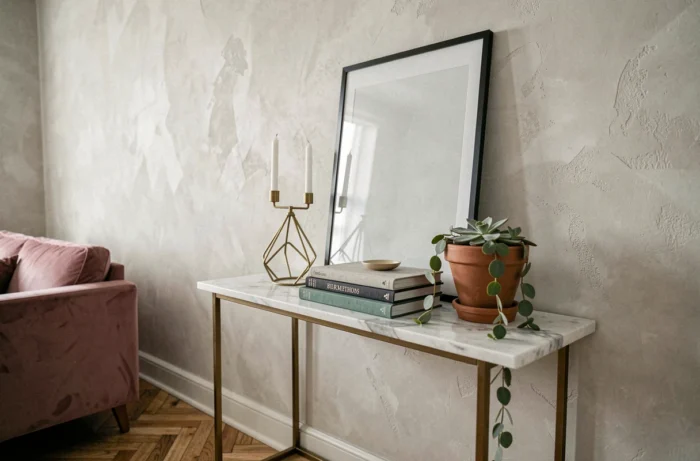
Compliance and composition: the criteria overlooked in gift guides
The REACH regulation governs the presence of chemical substances in objects sold in Europe, including decorative items. Scented candles, which are prevalent in gift selections, are directly affected: their composition (wax, wick, fragrance) determines indoor air quality once lit.
Vegetable wax candles (soy, rapeseed) emit fewer volatile organic compounds than low-quality paraffins. The lead-free braided cotton wick has become a minimal standard. Checking the list of fragrance ingredients on the label helps eliminate products containing regulated allergens.
The Triman logo, mandatory in France, indicates that the object or its packaging is part of a sorting system. Its absence on a product sold online from France constitutes a regulatory breach, which may raise concerns about the manufacturer’s credibility.
Selection criteria for a reliable decorative gift
- Presence of the CE marking for lighting and electrical objects (designer lamp, garland)
- Clear indication of the main material on the product sheet (avoid vague mentions like “natural material”)
- Usable return policy, as a decorative object that does not fit into an interior should be exchangeable without friction
- Packaging suitable for transport, especially for ceramics and glass, with internal cushioning rather than just bubble wrap
A successful decorative gift relies less on current trends than on real compatibility with the recipient’s interior. Durable material, controlled finish, transparent composition: these three filters are sufficient to eliminate the majority of disappointing purchases.