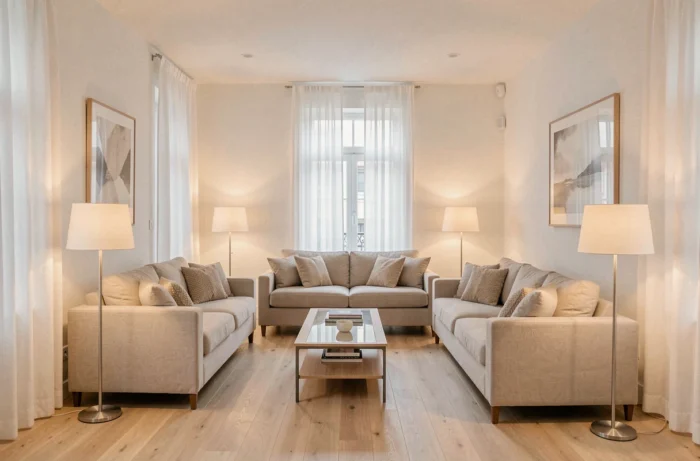
Some rooms resist all classic decor tricks. North-facing, close proximity to neighbors, single window at the end of a hallway: when natural light is insufficient, it is necessary to combine light circulation, indirect lighting, and targeted interventions to sustainably illuminate an underexposed space. Here are ten concrete solutions, listed in no particular order, to adapt according to the configuration of each room.
1. LED strip in cornice for diffuse indirect lighting
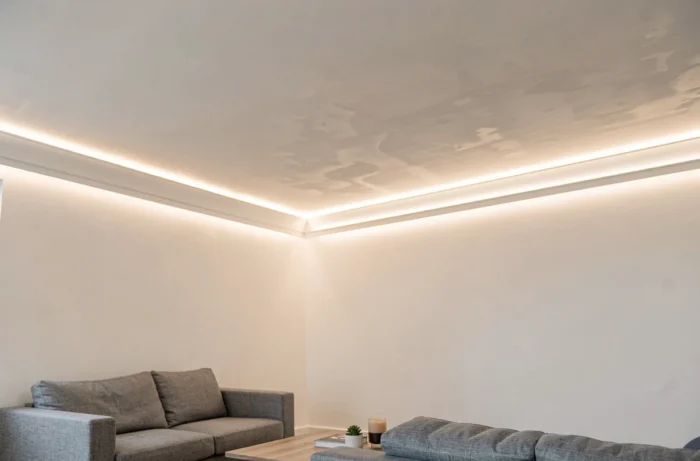
An LED strip placed in a cornice groove projects light towards the ceiling, which redistributes it throughout the room. This indirect light by reflection off the ceiling eliminates the shadows cast by a central ceiling light.
We recommend a strip with a CRI above 90 and a temperature between 2,700 K and 3,000 K for living spaces. A matte white ceiling optimizes diffusion, while a satin ceiling concentrates the flow more downward.
2. Furniture backlighting to break low shadow areas
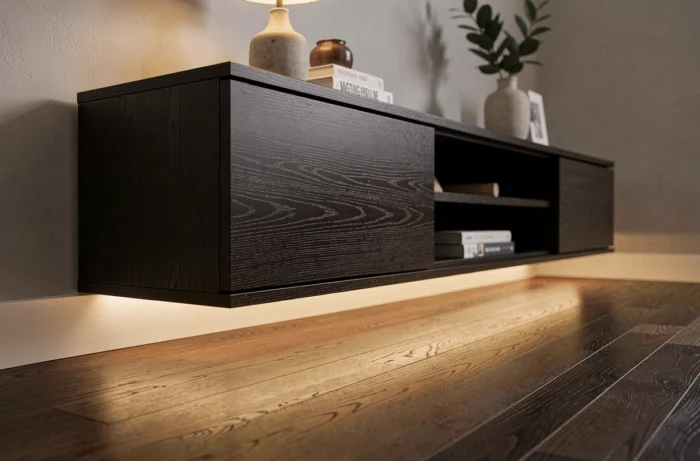
The low corners of a dark room remain systematically underexposed. Installing an LED strip behind a low piece of furniture, a bookshelf, or a sideboard creates a halo that enhances perceived brightness without adding a visible light source.
This principle works particularly well in a north-facing living room where the furniture lines the wall opposite the window. The depth effect eliminates the impression of an opaque wall. For other ways to bring light into a dark room, the choice of wall finishes plays an equally crucial role.
3. Light satin paint on walls perpendicular to the window
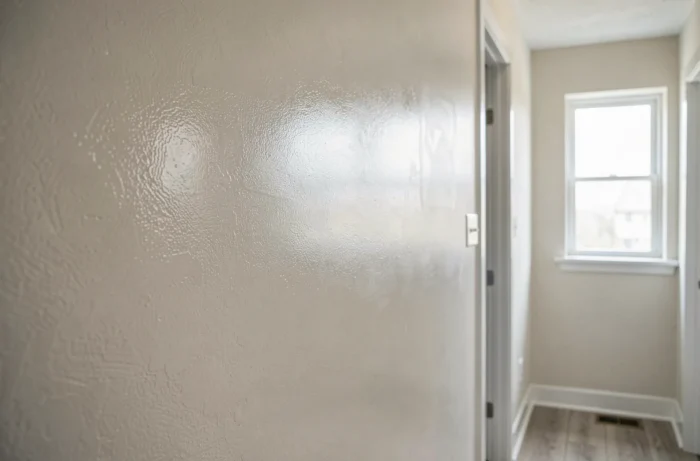
Painting in white is not always enough. What matters is the satin or velvet finish on the walls perpendicular to the opening. These walls capture the low-angle light and reflect it sideways, whereas a matte finish absorbs it.
On the wall facing the window, however, a matte finish avoids annoying glare. Combining both finishes in the same room requires a consistent color choice to maintain visual coherence.
4. Clearing window surroundings by at least 40 cm
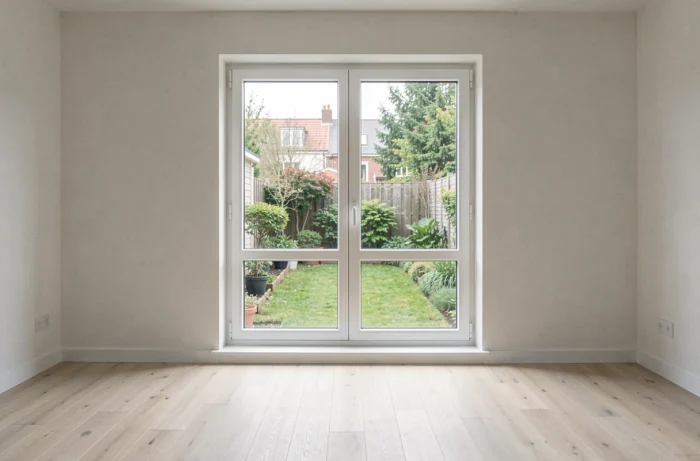
Any obstacle placed within 40 cm on either side of a window intercepts a significant portion of the incoming light flow. Tall furniture, large plants, thick lined curtains: all filters that reduce the reach of natural light in the room.
Replacing opaque curtains with light, translucent sheers, and then moving the first piece of furniture back by at least 50 cm, significantly changes the perceived brightness from the first meter from the opening.
5. Large mirror placed opposite or at an angle to the light source
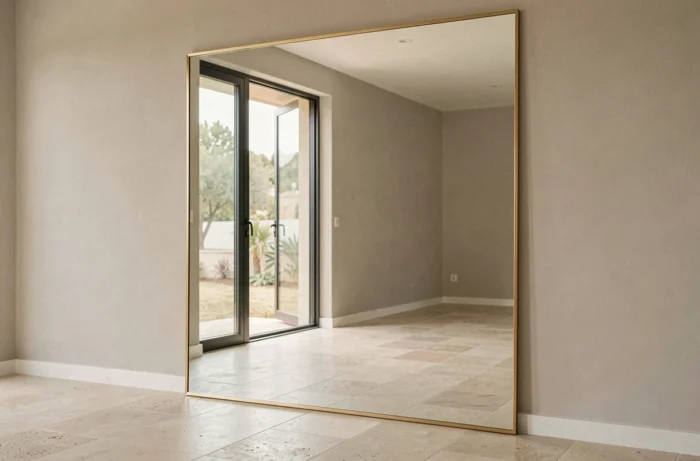
A mirror does not create light; it redistributes it. Positioned opposite the window, it visually doubles the source. Placed at an angle, it redirects the flow to a dark corner that direct light does not reach.
A mirror placed at an angle redirects light to the dead zones of an L-shaped room or a blind hallway. We find that mirrors over one meter tall have a real effect on brightness, while small decorative mirrors remain anecdotal.
6. Multiply light sources at three distinct heights
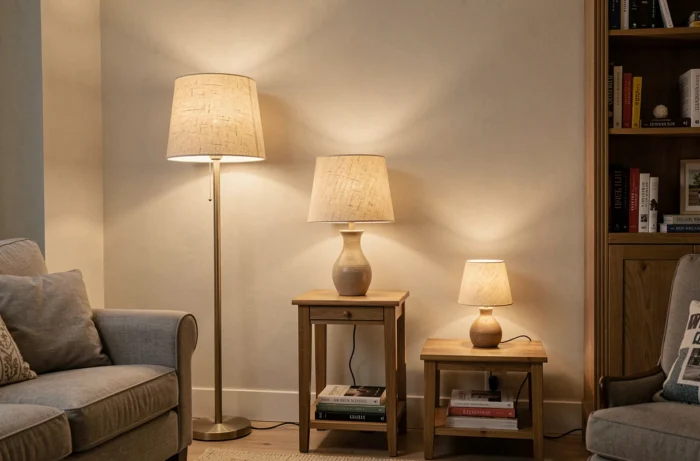
A single ceiling light flattens the volumes and leaves dense shadows under each piece of furniture. The basic rule in interior lighting: combine at least three sources at different heights (ceiling, mid-height, low level).
- Ceiling height: pendant or adjustable spot for general lighting
- Mid-height: wall sconces or reading lights for functional lighting
- Low level: table lamps, floor lamps, or backlighting for ambiance
This layering eliminates harsh contrasts and gives a sense of homogeneous volume, even in a small room.
7. Light tube (solar conduit) for blind rooms
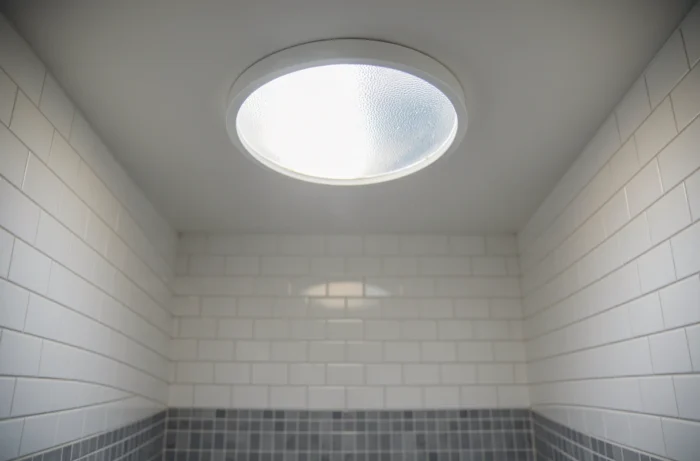
When there is no window and decor alone does not change anything, the tubular solar conduit is the most direct solution. A rigid tube with a reflective coating captures light from the roof and diffuses it via a ceiling fixture in the room below.
The installation requires access to the roof and a limited conduit length. This intervention remains a small job compared to creating an opening, but it radically transforms a bathroom or an interior dressing room.
8. Interior glass surfaces to circulate light between rooms
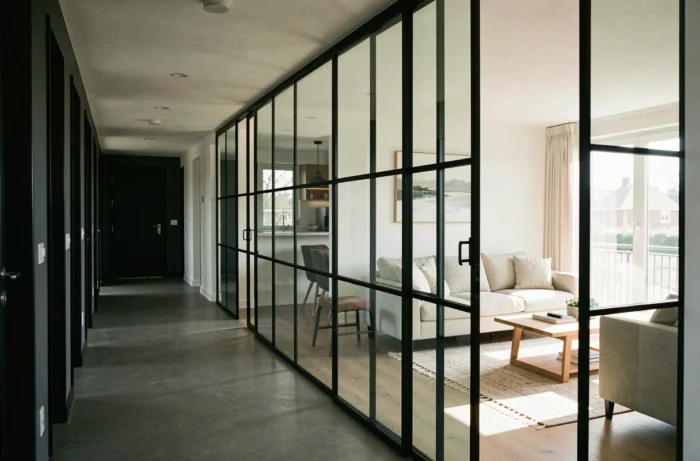
An interior glass wall, a glazed transom above a door, or a simple fixed glazed frame in a partition allows light from a well-exposed room to pass through to a blind or semi-blind room.
The interior glass wall circulates light without removing the partition. It is a solution to favor in Haussmann-style apartments or terraced houses where only the front facade receives sunlight.
9. Light wood or lacquered furniture to avoid light absorption
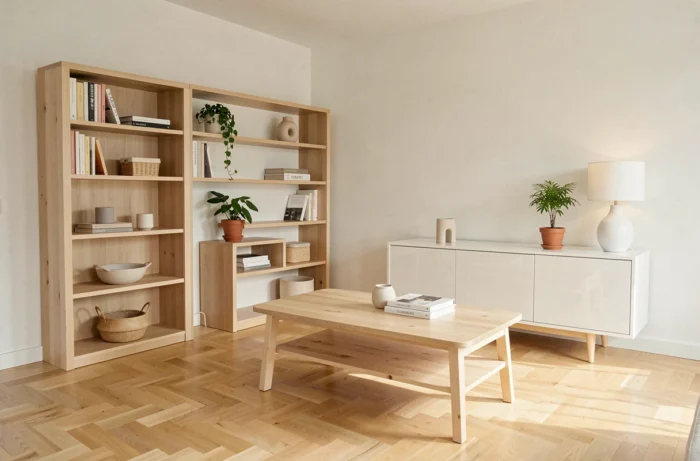
A piece of dark walnut or wenge furniture absorbs light like a dark wall. In a room that is already poorly lit, every surface counts. Choosing light oak, birch, or white lacquer finishes releases ambient brightness.
This principle also applies to open shelves rather than closed ones: they allow light to pass through instead of creating an opaque block against the wall.
10. Adjustable outdoor light reflector
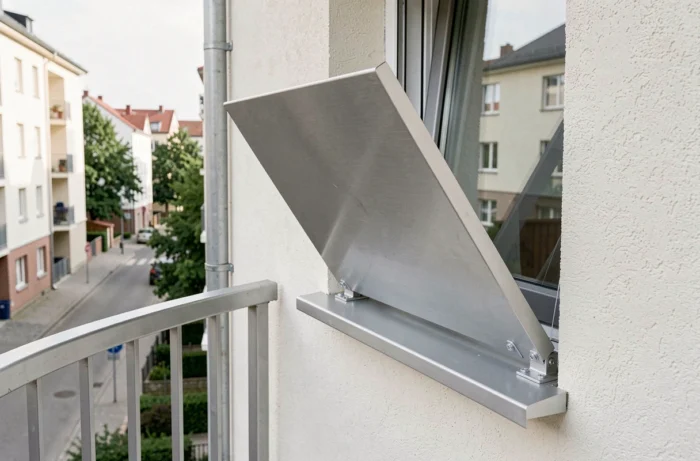
When the outdoor environment blocks light (narrow courtyard, overlooking), an outdoor reflector placed on the windowsill or mounted on the facade captures the sky’s rays and redirects them inside. These devices, sometimes called passive heliostats, work without electricity.
Their effectiveness depends on orientation and reflective surface. On a north-facing window at ground level, a properly angled reflector can significantly increase the amount of natural light entering the room.
Every dark room has its own constraints: orientation, depth, presence or absence of a window. Combining two or three of these solutions produces a more pronounced result than a single intervention pushed to the extreme. The first step remains to clear the window and work on wall finishes before considering works like a solar conduit or an interior glass wall.