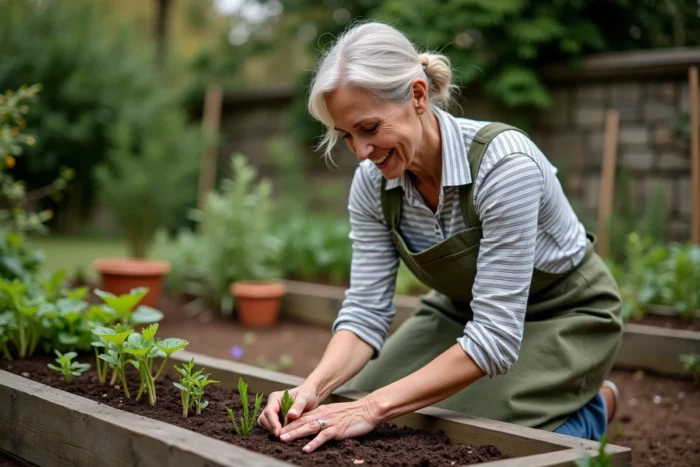
Natural gardening refers to a set of cultivation techniques that exclude any synthetic plant protection products to maintain the soil, protect crops, and manage weeds. Since the implementation of the Labbé law in 2019, individuals are no longer allowed to buy, possess, or use chemical herbicides in their gardens.
Natural gardening is therefore no longer just an ecological choice: it is the legal framework within which every amateur gardener now operates throughout the year.
Labbé Law and Weeding: What You Can Still Use in the Garden
Many gardeners are looking for substitutes for banned herbicides and are turning to white vinegar or salt. These two products do effectively destroy visible vegetation, but they permanently sterilize the soil by disrupting its pH and microfauna. The remedy then becomes worse than the initial problem.
The alternatives compliant with regulations are based on mechanical or biological principles. Three approaches complement each other depending on the season and the area to be treated:
- Manual or mechanical weeding (hoe, weeding knife) remains the most precise action for flower beds and the edges of the vegetable garden. Regular weeding every two to three weeks in spring prevents weeds from seeding.
- Thermal weeding, by flame or steam, is suitable for paths and terraces. Its effectiveness depends on repetition: a single application is not enough to exhaust perennial roots.
- Ground cover plants (dwarf clover, creeping thyme, bugle) permanently occupy space and significantly reduce the emergence of new unwanted shoots while protecting the soil structure.
Additional resources on these techniques are available on the Jardiner Naturellement website, which details methods suited to each type of surface.
Mulching and Soil Fertility: The Foundation of a Productive Natural Garden
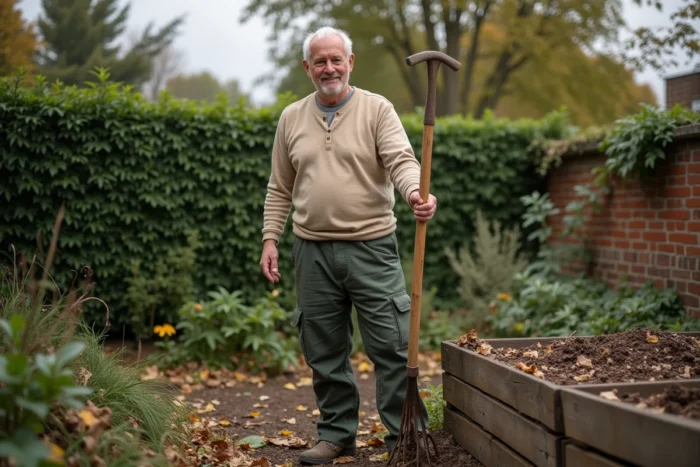
Mulching is the pivotal technique of natural gardening. A sufficiently thick layer of organic matter laid on the soil serves three simultaneous functions: it slows down the germination of weeds, limits water evaporation, and nourishes underground life as it decomposes.
The choice of mulch changes with the season. In spring, a layer of dried grass clippings or shredded leaves decomposes quickly and releases nitrogen when crops need it most. In autumn, a coarser mulch (branch chippings, straw) protects the soil from frost while slowly degrading over the winter.
False Friends to Avoid
Pine bark, very common in garden centers, acidifies the soil over the years. It is suitable for heathland beds (hydrangeas, rhododendrons), but when placed around a vegetable garden or fruit trees, it eventually disrupts the pH and hinders nutrient absorption.
Mineral mulching (slate, pumice) does not nourish the soil. It limits evaporation but does not contribute to the organic matter cycle. For a natural garden whose fertility relies on the biological life of the soil, organic mulch remains the only coherent long-term option.
Crop Rotation and Plant Associations in the Vegetable Garden
Growing the same vegetables in the same spot for several consecutive years depletes the soil of certain elements and encourages the permanent establishment of specific pests. Crop rotation every three to five years breaks this cycle. The principle is simple: alternate different botanical families in each plot from one season to the next.
In practice, grouping vegetables by nutritional needs simplifies planning. Solanaceae (tomatoes, peppers, eggplants), which are very nitrogen-hungry, ideally follow a crop of legumes (beans, peas, broad beans) that fixed atmospheric nitrogen in the soil the previous season.
Plant Associations That Actually Work
Aromatic plants play a measurable protective role in the vegetable garden. Lavender, thyme, and sage release volatile compounds that disrupt the olfactory tracking of certain pest insects. Planting a border of thyme around rows of cabbage, for example, reduces the pressure from cabbage whites.
The tomato-basil association is not just a culinary classic: basil attracts beneficial pollinators for tomato setting, and its dense foliage keeps the base of the plants cooler in summer. Conversely, some associations are counterproductive. Alliums (garlic, onion, shallot) hinder the growth of legumes and should not share the same bed.
Water Management in the Natural Garden: Water Less but Better
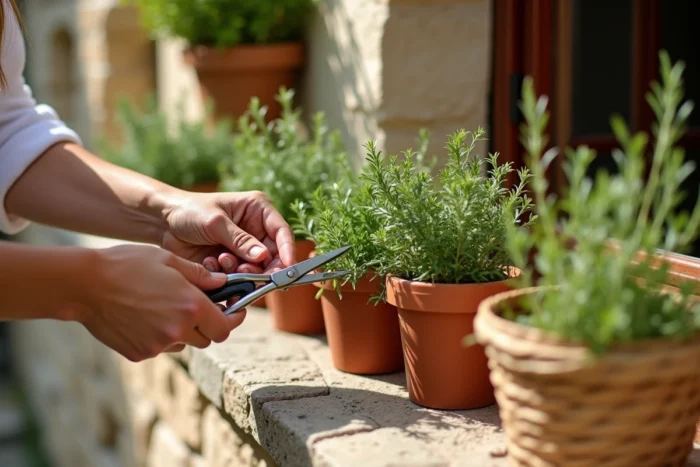
Abundant and superficial watering promotes surface root development, making plants vulnerable to the slightest drought. Watering deeply and less frequently encourages roots to go down in search of moisture, making plants more resilient to summer heat.
The time of day matters as much as the quantity. Watering in the late afternoon or early morning limits evaporation. In summer, watering in full sun can cause leaf burns if droplets remain on the foliage.
Collecting and Saving Rainwater
A rainwater collector installed under a downspout provides non-limestone, room-temperature water that plants absorb better than tap water. Coupling this reserve with thick mulching at the base of crops allows for significantly reducing watering frequency, even during hot spells.
In the vegetable garden, drip irrigation or watering at the base of plants is preferable to sprinkling. Sprinkling wets the foliage, which promotes the development of fungal diseases like blight on tomatoes or rust on beans.
Natural gardening follows a common-sense principle that holds true every season: a living, covered, and properly drained soil requires fewer interventions than bare soil exposed to the elements. The techniques described here (organic mulching, rotation, associations, targeted watering) form a coherent system where each practice reinforces the others. The regularity of actions matters more than their intensity.