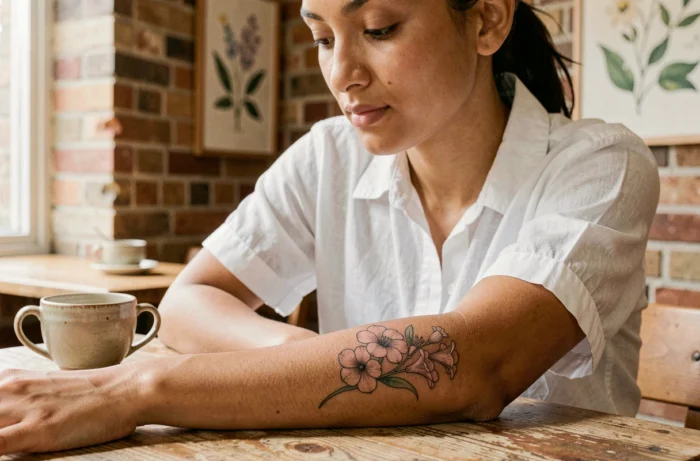
The freesia tattooed on the forearm is part of the floral designs that have gained popularity in European studios in recent years. This flower, less common than the rose or lotus in the tattoo repertoire, carries a specific symbolism that deserves to be unpacked before going under the needle. Choosing the forearm as a placement adds a dimension of permanent visibility that influences both the graphic style and the message conveyed.
REACH Regulation and Tattoo Inks: What Changes for Floral Designs
The European REACH restrictions on tattoo inks, which came into effect in January 2022 and were extended to certain pigments like Blue 15:3 and Green 7 in January 2023, have altered the palette available in studios. The pastel shades and subtle gradients, highly sought after for representing flowers like the freesia, are directly affected.
For a freesia tattoo on the forearm, this means that the lavender, pale yellow, or soft pink hues that characterized this design are no longer always achievable with the same pigments as before. Some studios have reformulated their ranges, while others now favor fine line monochrome to circumvent the constraint.
Understanding the meaning of the freesia on the forearm also requires taking these technical evolutions into account, as the chosen color alters the symbolic reading of the design. A yellow freesia does not send the same signal as a purple freesia or a clean black outline.
In France, the decree 2023-1113 has mandated since January 1, 2024, a tattoo vigilance system. Each studio must identify the batch of ink used on each client and report any adverse effects to ANSES. This framework allows for linking any potential skin issues to a specific brand and batch, which enhances traceability for colored tattoos like those representing flowers.
Freesia Tattooed on the Forearm: A Multi-Level Symbolism
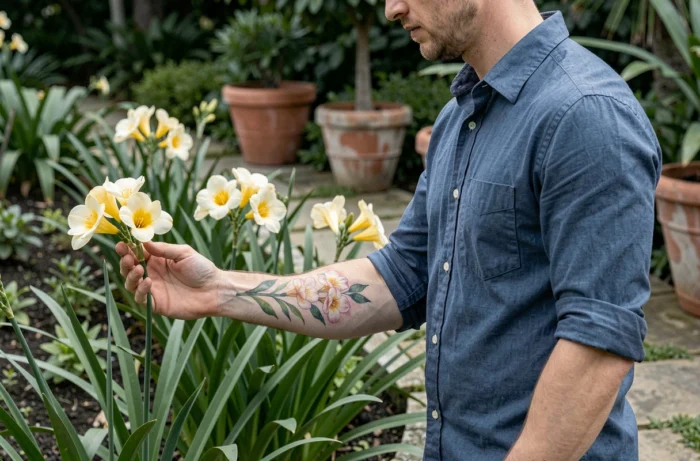
The freesia traditionally conveys messages related to trust, innocence, and new beginnings. Tattooed on the forearm, an area exposed daily, it becomes a visible reminder of these values. The choice is not trivial: selecting such a readable placement indicates a desire to publicly display what the flower represents.
The Colors and Their Symbolic Reading
Each shade of the freesia carries a distinct emotional register:
- The yellow freesia evokes friendship and joy, often chosen to mark a lasting bond with a loved one or to celebrate a bright period in life.
- The orange freesia symbolizes enthusiasm and passion. It is a bolder option, less common in studios, that conveys an energy directed towards action.
- The white or cream freesia refers to purity and innocence. It is frequently associated with a new beginning, a grief overcome, or personal rebirth.
- The purple or lavender freesia embodies spirituality and inner reflection. In tattooing, it attracts those who associate the floral design with a quest for meaning.
Field feedback varies on this point: some tattoo artists observe that most of their clients choose the freesia for its graphic form before considering its symbolism, while others report the opposite. The meaning attributed remains very personal.
A Message of Love, Friendship, or Renewal
The tattooed freesia often expresses a deep emotional bond rather than a flamboyant romantic declaration. Unlike the rose, it evokes a discreet tenderness, a loyalty that does not manifest in excess. On the forearm, this restraint creates a contrast with the visibility of the placement, giving the design an interesting tension between modesty and affirmation.
Graphic Style of the Freesia Tattoo: Fine Line, Realistic, or Minimalist
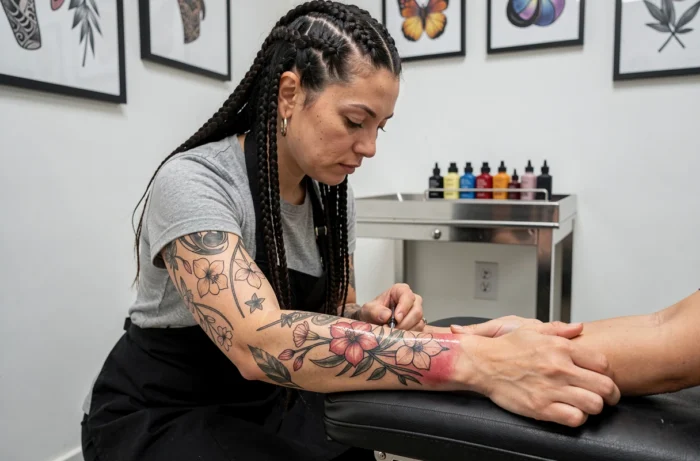
The choice of style radically alters the perception of the tattoo. The fine line, with its thin strokes and delicate details, corresponds to the natural elegance of the freesia. This style currently dominates requests for floral designs on the forearm, partly because it adapts well to post-REACH pigment constraints.
The realistic style, with its shading and worked colors, requires a tattoo artist skilled in gradients. It is in this approach that the restrictions on certain pigments are most felt. A realistic colored freesia requires checking in advance with the studio which shades remain available in compliant formulations.
The minimalist style (single line, simple outline) suits those who want a discreet symbolic reminder. On the forearm, a minimalist freesia of a few centimeters generally ages better than a highly detailed design, as the skin in this area is subject to repeated movements and sun exposure.
Forearm: Specific Constraints of This Placement for a Floral Tattoo
The forearm presents a relatively flat and elongated surface, which favors vertical compositions. A sprig of freesia with several cascading flowers naturally fits into this geometry. The inner side of the forearm, less exposed to the sun, retains details and colors better over time.
The outer side is more exposed to UV rays, which accelerates the degradation of light pigments. For a colored freesia, prioritizing the inner side or ensuring rigorous sun protection is part of the precautions that tattoo artists regularly recommend.
Healing on the forearm generally proceeds without particular difficulties, provided that repeated friction with tight clothing is avoided during the first weeks. This area remains one of the most requested for floral tattoos, precisely because it offers a good compromise between visibility, usable surface, and comfort during the session.
The freesia tattoo on the forearm combines rich symbolism (trust, innocence, emotional bond) with concrete technical choices related to inks, style, and precise placement. Checking the compliance of the pigments used and discussing the style with the tattoo artist before the session remains the best way to achieve a result faithful to the flower and what it represents.