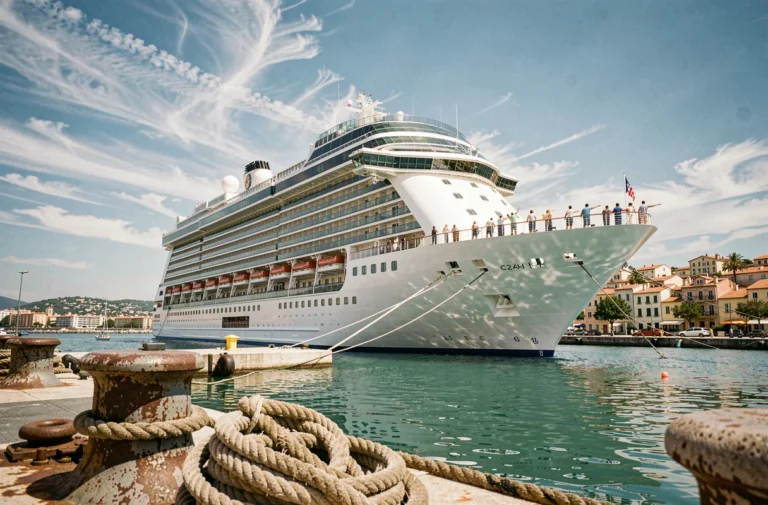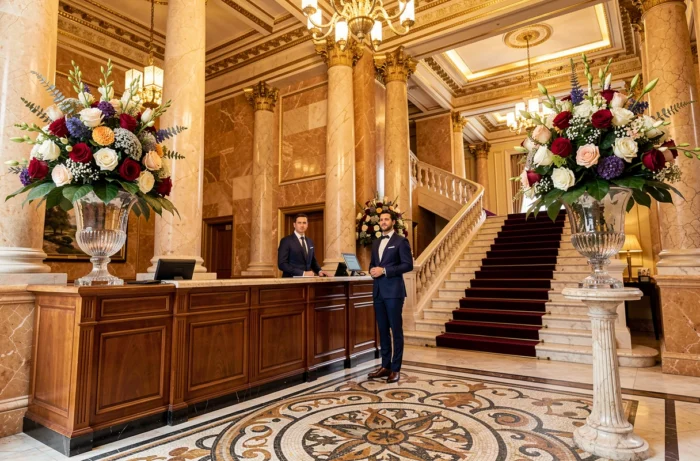
When searching for an “8-star hotel,” one encounters spectacular marketing promises, but no official classification exceeds five stars. Hotel rating systems, whether governmental or private like Forbes Travel Guide, all cap at this threshold. The term “8 stars” functions as an advertising superlative to designate establishments whose level of service far exceeds standard grids.
Why the “8-star hotel” category does not officially exist
It is often stated that the Burj Al Arab in Dubai is a 7-star hotel. This designation originated from a journalistic formula in 1999, during the presentation of the establishment. Its actual classification remains five stars, including according to Forbes Travel Guide. The same mechanism applies to “8 stars”: no organization, whether governmental or independent, issues this type of label.
The confusion partly arises from the fragmentation of ranking systems. France, Italy, Spain, and the United Arab Emirates each have distinct official frameworks. The United States does not even have a single governmental hotel rating system and relies on private inspection organizations.
One can consult a list of 8-star hotels to identify establishments regularly associated with this designation, while keeping in mind that it is an informal category.

Palace Label in France and private rankings: the real distinctions beyond stars
In France, the answer to “more than five stars” already exists: it is the Palace label, awarded by Atout France. This label distinguishes five-star establishments that meet additional criteria of location, history, gastronomy, and service. It is the only official distinction that exceeds the standard ceiling within a regulated framework.
Internationally, two private systems dominate:
- Forbes Travel Guide awards stars from one to five, with a “Five-Star” category reserved for establishments inspected anonymously according to hundreds of service criteria.
- AAA (American Automobile Association) uses a diamond system, with the “Five Diamond” level corresponding to the top of the scale.
- The “La Liste” ranking aggregates scores from guides, customer reviews, and expert evaluations to produce an annual ranking of the best hotels in the world.
These systems do not reach 8, but their highest level precisely designates the hotels that marketing calls “7 or 8 stars.”
Establishments associated with the “8-star” label: what sets them apart
When looking at the hotels regularly cited in this informal category, one common point emerges: the ratio of architectural investment to space per guest is disproportionate. The Burj Al Arab, for example, offers only duplex suites. The Emirates Palace in Abu Dhabi boasts an extraordinary building area for a relatively limited number of rooms.
What distinguishes these establishments from “simple” five stars lies in a few concrete markers:
- A very high staff-to-guest ratio, often exceeding what ranking grids require for five stars.
- Services that involve permanent customization: dedicated butler, on-demand dining at any hour, private transfers included.
- An architectural positioning that makes the hotel itself a destination, not just accommodation.
Feedback varies on this point, but several experienced travelers note that the perceived difference between an excellent five-star hotel and a so-called “8-star” hotel is more about individualized service than physical amenities.
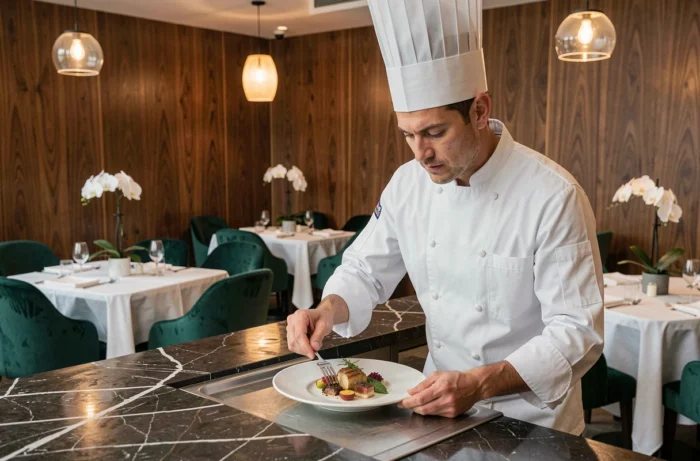
Dubai, Abu Dhabi, Geneva: recurring destinations of extreme luxury
The United Arab Emirates concentrate the majority of establishments associated with the “8-star” concept. The explanation is structural: these countries invest massively in hospitality as a national showcase, without the constraints of strict governmental classification comparable to the French system.
Dubai consistently comes up with the Burj Al Arab. Abu Dhabi with the Emirates Palace. These two establishments have become global references for extreme hotel luxury, even though their official classification remains at five stars.
Extreme luxury hotels in Europe
Europe is not absent from the segment. In France, palaces like La Réserve Paris or the Bristol rank at the top of international rankings. The La Liste 2025 ranking places several European establishments in its global top, including French addresses.
In Switzerland, in Geneva or on the Riviera, some historic establishments compete with recent projects from the Gulf, focusing on discretion, gastronomy, and an exceptional natural setting rather than architectural excess.
How to evaluate a hotel beyond star classification
Rather than searching for a number of stars that does not exist, it is beneficial to cross-reference several concrete indicators. Presence in the Forbes Five-Star ranking or in the La Liste ranking serves as a reliable filter. The Palace label in France remains the only official mechanism that distinguishes a level above five stars.
The number of stars self-assigned by a hotel in its communication guarantees nothing. An establishment that presents itself as “7 or 8 stars” without appearing in recognized references is simply using a marketing argument.
The best approach remains to verify the hotel’s presence in at least two independent rankings, then read detailed reviews regarding individualized service, dining, and the staff-to-guest ratio. These concrete elements separate a very good five-star hotel from a truly exceptional establishment.